
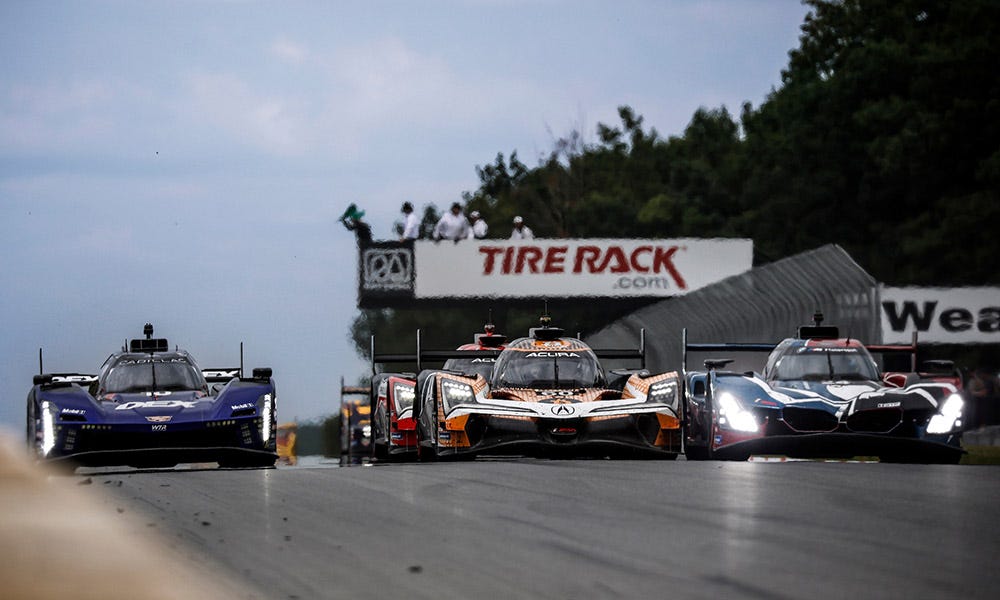
With two IMSA WeatherTech SportsCar Championship races remaining this season, and both comprising of all four classes in action, this weekend’s TireRack Battle on the Bricks at Indianapolis Motor Speedway and the Motul Petit Le Mans at Michelin Raceway Road Atlanta in October are surely going to produce some fireworks.
However, IMSA’s officiating team are pushing for improved driving standards in the wake of incident-filled outings at Watkins Glen and Road America, which has forced the sanctioning body to clamp back down on its more thorough officiating process, with more severe consequences, measures that were first introduced some 12 months ago.
The increasingly aggressive nature, particularly from the top-class GTP cars in its two most recent races, has put driving standards back in the spotlight, with questions remaining how IMSA will police the championship-deciding races.
“I think priority, for IMSA, is obviously safety,” says IMSA’s senior vice president of competition Simon Hodgson. “The second is ensuring the competition is fair. I think we recognize that IMSA competition is tough. Sometimes it can be aggressive, but in the case of WeatherTech with the very nature of the four classes running together, cars running at different speeds and taking different lines in traffic, it’s complicated.
“But IMSA’s messaging has always been and will be moving forward, ‘You need to race responsibly, and you need to provide the competitor you’re racing with racing room.’ I think for any of you that have heard those conversations in the past, that messaging has been delivered across all IMSA series.
“Obviously, when that doesn’t occur, IMSA gets involved, but we take a structured approach to how we’re doing that. We have a ruleset that we utilize and we have a penalty process that we utilize that’s tiered and structured. That is applied after careful consideration by [the] race director of each series in conjunction with the driver advisors, but also in consideration of the incident itself, what led up to it.”
Hodgson stressed that the “regulations aren’t broken” and that the competitors must improve their own driving standards.
“What we’re seeing is some behavior starting to escalate,” he says. “IMSA understands its responsibility here, stating clearly to the competitors where that line is. I feel that message has been delivered already. However, we saw nine full-course yellows at Road America, which certainly isn’t what any of us wanted. I’m sure the competitors didn’t want that either, but certainly IMSA’s fans didn’t want that.”